
Hong Kong vs Singapore for a Holding Company: How to Choose in 2026

Key Takeaways
Both Hong Kong and Singapore are world-class holding company jurisdictions – low tax, stable legal systems, and deep banking infrastructure. The right choice comes down to two things: where your operating subsidiaries are and how much substance you’re willing to maintain.
- China-facing business? Hong Kong’s proximity, CEPA access, and RMB infrastructure make it the natural anchor.
- Southeast Asia or global DTA coverage? Singapore’s treaty network (100+ jurisdictions) and ASEAN positioning win.
Why Asia-Based Holding Companies Are Booming
The numbers tell the story. Cross-border investment flows within Asia have grown steadily through the mid-2020s, and entrepreneurs setting up multi-entity groups increasingly need a top-tier holding jurisdiction – not an offshore shell, but a credible, treaty-connected hub that banks, investors, and tax authorities respect.
Hong Kong and Singapore are the two obvious answers. Both offer:
- No capital gains tax
- No dividend withholding tax (HK) or very low effective rates (SG)
- Common law legal systems with strong IP protection
- English as a working language of business and law
- World-ranked banking systems
The question isn’t which one is “better.” It’s which one fits your specific structure.
Hong Kong vs Singapore: Side-by-Side Comparison
| Factor | Hong Kong | Singapore |
| Corporate tax rate | 8.25% (first HKD 2M) / 16.5% above | 17% flat (with startup exemptions) |
| Territorial system | Yes – offshore profits generally untaxed | Partial – foreign-sourced income rules apply |
| Capital gains tax | None | None (conditions apply post-2024 rules) |
| Dividend withholding tax | None | None |
| Double tax treaty network | 60 CDTAs (as of Sept 2026) | 100+ jurisdictions |
| Incorporation timeline | 3–5 business days | 5–7 business days |
| Foreign ownership | 100% allowed | 100% allowed |
| Nominee director rules | Not required; local company secretary mandatory | Local director required (Singapore resident) |
| Banking access | Excellent; HSBC, Standard Chartered, DBS HK + EMIs | Excellent; DBS, OCBC, UOB + EMIs |
| China access | Direct – CEPA, RMB clearing, proximity | Indirect – via treaty or regional HQ |
| Substance requirements | Moderate | Stricter (especially post-2024 Section 10L rules) |
| Annual compliance cost (est.) | USD 2,000–5,000 | USD 3,000–7,000 |
Hong Kong as a Holding Company Jurisdiction
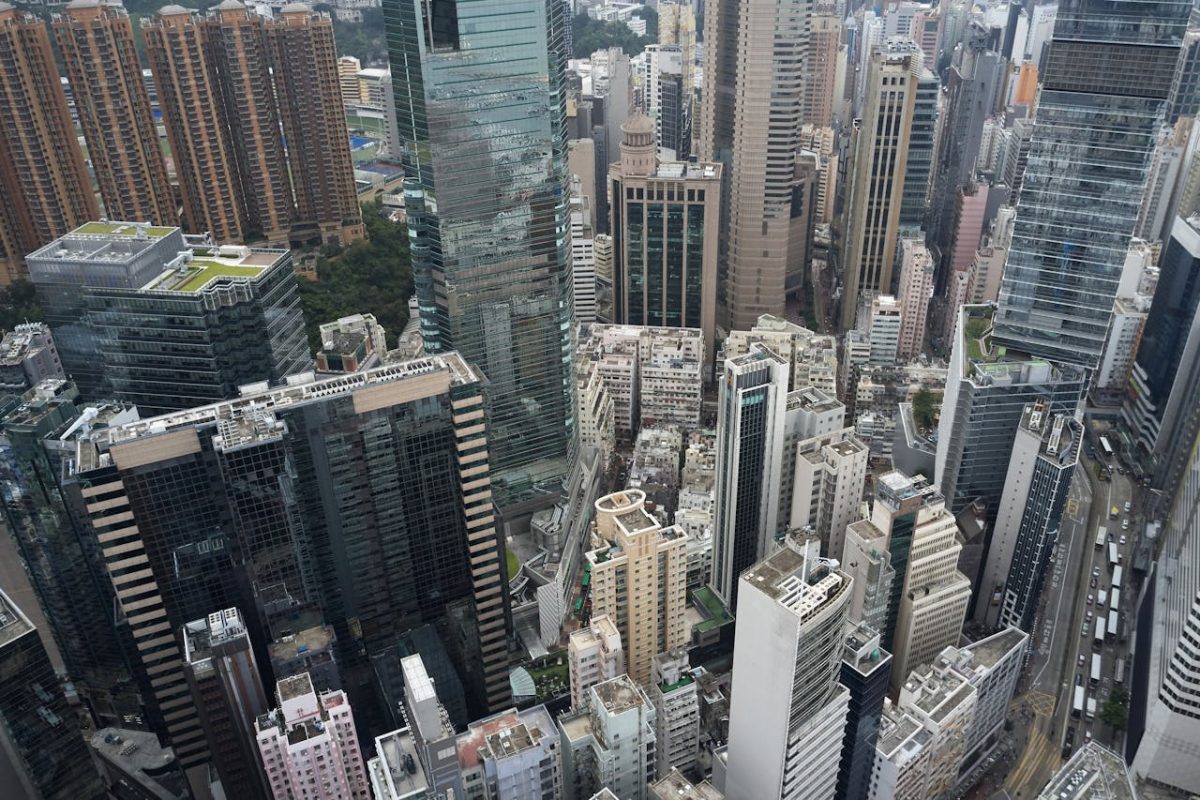
Territorial Tax System (8.25% / 16.5%)
Hong Kong taxes only profits sourced in Hong Kong. For a holding company whose income flows from foreign subsidiaries – dividends, royalties, interest – this is a significant structural advantage.
The two-tier rate is equally important:
- 8.25% on the first HKD 2 million of assessable profits
- 16.5% on everything above
One important caveat: the offshore tax status is not automatic. It requires a formal, evidence-based application to the Inland Revenue Department (IRD). The IRD will scrutinize where decisions are made, where contracts are negotiated, and where services are performed. Get this wrong and you’ll be taxed at the full rate on income you expected to be exempt.
Hong Kong also has no controlled foreign company (CFC) rules – a genuine structural advantage for groups with subsidiaries in multiple jurisdictions.
For large multinationals above the EUR 750 million revenue threshold, note that Hong Kong’s Pillar Two / global minimum tax rules took effect for fiscal years beginning on or after 1 January 2025. Below that threshold, the territorial system remains fully intact.
Gateway to Mainland China
No other jurisdiction offers Hong Kong’s combination of physical proximity, legal familiarity, and institutional access to mainland China.
Practically, this means:
- CEPA (Closer Economic Partnership Arrangement) gives HK-incorporated entities preferential access to certain mainland sectors
- Hong Kong is the world’s leading offshore RMB clearing hub – critical for businesses invoicing in CNH
- The HK–China CDTA (Comprehensive Double Taxation Arrangement) reduces withholding tax on dividends from mainland subsidiaries to 5% (for ≥25% shareholding), versus the standard 10%
- Mainland Chinese investors and partners recognize HK structures and are comfortable dealing with them
If your holding company sits above a mainland operating subsidiary, Hong Kong is almost always the right answer.
Robust Banking Infrastructure
Hong Kong’s banking system is one of the deepest in Asia. For a holding company, this matters for two reasons: account openability and multi-currency functionality.
Traditional tier-1 banks – HSBC, Standard Chartered, Hang Seng, DBS Hong Kong – remain the gold standard for holding structures. They’re demanding on KYC, but a clean, well-documented holding company with a credible business plan gets through.
The recommended approach is a dual-track strategy: a traditional bank account for long-term credibility and a digital corporate platform (EMI) for day-to-day speed and multi-currency payments.
Compliance Requirements
Hong Kong compliance is straightforward but non-negotiable:
- Company Secretary: A locally resident company secretary is mandatory under the Companies Ordinance. This cannot be an overseas individual or a generic administrative assistant.
- Annual Return (Form NAR1): Must be filed within 42 days of the company’s incorporation anniversary. Late filing fees escalate sharply.
- Profits Tax Return (PTR): The first PTR arrives roughly 18 months after incorporation. It must include HKFRS-compliant financial statements and an independent CPA audit report – even if the company made zero profit or operated entirely offshore.
- Significant Controllers Register (SCR): Every private limited company must maintain a physical, up-to-date register tracking UBOs and shareholders with 25%+ ownership.
Singapore as a Holding Company Jurisdiction
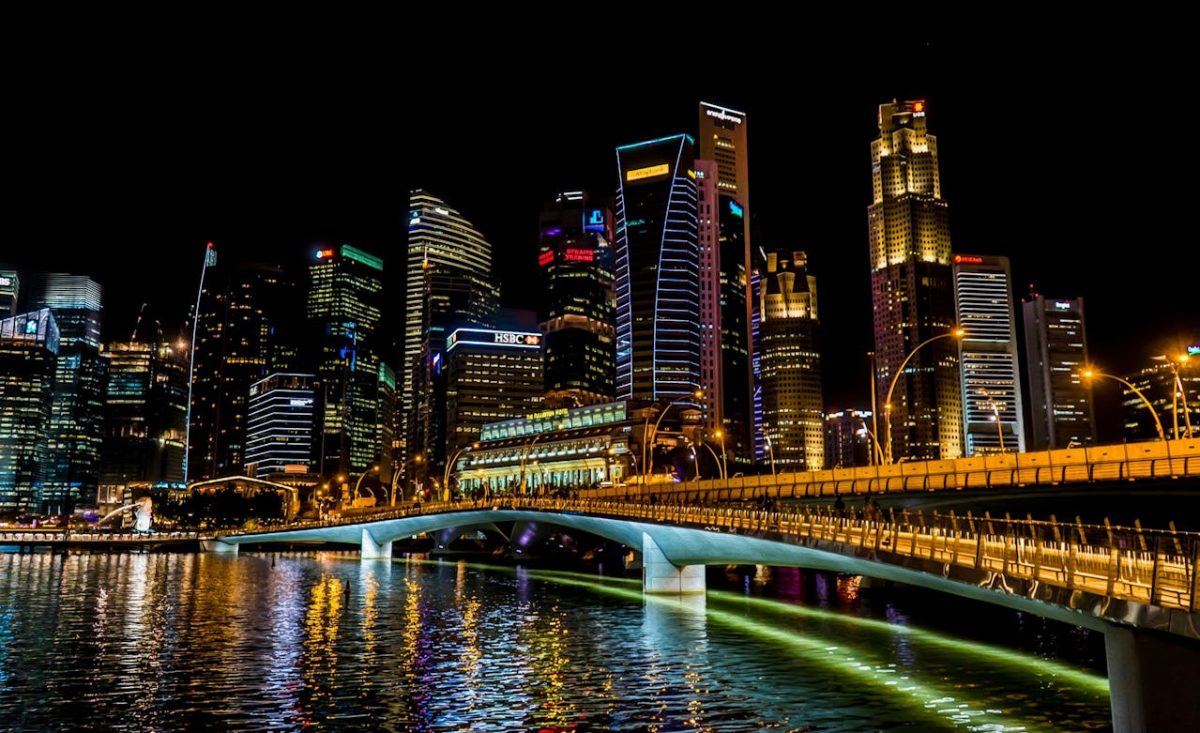
17% Corporate Tax with Extensive Exemptions
Singapore’s headline rate of 17% looks higher than Hong Kong’s, but the effective rate for qualifying companies is often much lower.
The Start-Up Tax Exemption (SUTE) applies for the first three Years of Assessment:
- 75% exempt on the first SGD 100,000 of chargeable income
- 50% exempt on the next SGD 100,000
- Maximum exemption: SGD 125,000 per year
Important: SUTE is not available to investment holding companies – a critical point for pure holding structures. The Partial Tax Exemption (PTE) scheme applies instead, offering 75% exemption on the first SGD 10,000 and 50% on the next SGD 190,000.
Singapore also levies no dividend withholding tax and no capital gains tax (subject to conditions under the post-2024 foreign-sourced disposal gains rules).
Extensive Double Tax Treaty Network
This is Singapore’s clearest structural advantage over Hong Kong. With over 100 DTAs covering jurisdictions from the US and UK to Indonesia, India, and the UAE, Singapore gives holding companies far broader treaty access.
For a group with subsidiaries in multiple countries – say, Vietnam, Germany, and the UAE – Singapore’s treaty network can meaningfully reduce withholding tax on dividends flowing upward. Hong Kong’s 60 CDTAs are growing but still narrower.
Singapore’s DTA with India, for example, provides significant withholding tax relief on dividends and capital gains from Indian subsidiaries – a major draw for groups with South Asian exposure.
Stricter Substance Requirements
Singapore vs Hong Kong company formation comparisons often gloss over this point. Singapore has tightened its economic substance rules significantly since 2024.
Under Section 10L, foreign-sourced disposal gains are taxable when remitted to Singapore unless the holding company qualifies as an “excluded entity.” For a Pure Equity Holding Entity (PEHE), the test is manageable: regular statutory filings plus Singapore-based management and operations.
For non-PEHE holding companies, the bar is higher – local employees or outsourced functions under direct control, office premises, meaningful operating expenditure in Singapore, and board-level decision-making on the ground.
IRAS also tightened its Certificate of Residence requirements from 2025 onward, requiring stronger evidence of Singapore-based presence for foreign-owned investment holding companies.
The bottom line: Singapore rewards substance. If you’re prepared to genuinely operate from Singapore – a local director, a real office, regular board meetings – the structure holds up. If you’re looking for a light-touch holding vehicle, Hong Kong’s requirements are easier to meet.
Compliance Requirements
- Local director: At least one director must be a Singapore resident (citizen, PR, or Employment Pass holder). This is a hard legal requirement, not optional.
- Company Secretary: Must be a Singapore resident, appointed within 6 months of incorporation.
- Annual Return: Filed with ACRA within 5 months of financial year-end (for private companies).
- Corporate tax filing: Estimated Chargeable Income (ECI) filed within 3 months of financial year-end; full tax return by 30 November each year.
- Audit: Companies meeting at least two of three criteria (revenue > SGD 10M, assets > SGD 10M, 50+ employees) must be audited. Small holding companies often qualify for audit exemption.
Use Case 1 – China-Focused Business Chooses Hong Kong
A French entrepreneur runs a consumer goods brand sourcing from Guangdong and selling across Europe. She wants a holding company to sit above her mainland WFOE and her French SAS.
Why Hong Kong wins here:
- The HK–China CDTA reduces dividend withholding from the WFOE to 5% (vs 10% under the standard China rate)
- Her mainland suppliers and logistics partners are already familiar with HK entities – no friction
- RMB invoicing and CNH clearing are seamless through a Hong Kong bank account
- Incorporation takes 3–5 business days through a local agent; she’s operational fast
- The territorial system means dividends from her French subsidiary, taxed in France, aren’t taxed again in Hong Kong
Singapore would add complexity without benefit: her business has no Southeast Asian exposure, and the local director requirement means an extra cost and compliance layer.
Use Case 2 – Southeast Asia E-commerce Group Chooses Singapore
A Singapore-based team runs an e-commerce group with operating entities in Indonesia, Vietnam, Thailand, and the Philippines. They want a holding company to consolidate equity, receive dividends, and eventually attract a PE investor.
Why Singapore wins here:
- Singapore’s DTAs with Indonesia, Vietnam, and Thailand reduce withholding tax on dividends flowing up the chain
- PE investors – particularly those in the US and Europe – are more comfortable with Singapore structures than Hong Kong ones for Southeast Asian assets
- The team is already based in Singapore, so substance requirements are naturally met
- Singapore’s legal system and ACRA’s digital infrastructure make it straightforward to manage equity across multiple subsidiaries
- The best jurisdiction for a holding company in Asia targeting ASEAN exits is Singapore, consistently
Hong Kong would add friction: no meaningful DTA with Vietnam or the Philippines, and no natural banking relationship with the ASEAN operating entities.
Decision Framework: Which Should You Choose?
Use this table as a starting point. Every structure has nuances – but these are the dominant patterns.
| Your Situation | Recommended Jurisdiction |
| Primary business is in mainland China | Hong Kong |
| Subsidiaries across Southeast Asia | Singapore |
| You want the lowest possible headline tax rate | Hong Kong (8.25% on first HKD 2M) |
| You need maximum DTA coverage globally | Singapore (100+ treaties) |
| You want minimal substance requirements | Hong Kong |
| You’re planning a PE or VC fundraise | Singapore (preferred by most funds) |
| You’re invoicing in RMB / CNH | Hong Kong |
| Your investors or partners are in the US or EU | Singapore |
| You need the fastest incorporation | Hong Kong (3–5 days vs 5–7 days) |
| You have a team already based in Singapore | Singapore |
One rule of thumb: if more than 50% of your revenue or assets are China-linked, Hong Kong is almost always the right answer. If your group is genuinely pan-Asian or global, Singapore’s treaty network and investor familiarity tip the balance.
How Ouzhou Consulting Helps You Choose and Set Up
Ouzhou Consulting has been helping entrepreneurs and investors structure their Asian holding companies since 2018. With offices in both Hong Kong and Singapore, and a track record of supporting 400+ companies, the team handles the full setup – not just the paperwork.
What that looks like in practice:
- Jurisdiction analysis: A structured review of your business model, subsidiary locations, and investor requirements to identify the optimal holding jurisdiction
- Incorporation: Hong Kong companies incorporated in 3–5 business days; Singapore in 5–7 business days
- Company Secretary & Registered Office: Mandatory compliance roles handled from day one in both jurisdictions
- Accounting, audit, and tax filing: HKFRS-compliant financials, CPA audit reports, Profits Tax Returns in HK; SFRS financials and IRAS filings in SG
- Bank account opening: Document preparation, KYC support, and bank selection advisory for both traditional banks and EMIs
- Ongoing compliance: Annual returns, UBO registers, SCR maintenance, and deadline tracking – so nothing slips
The team works in English and French, and handles complex structures: multi-layer holding companies, offshore parent entities, and cross-border group reorganizations.
Ouzhou Consulting’s Take
In our experience supporting 400+ companies since 2018 – from solo founders to multi-entity groups – the single biggest mistake we see is founders optimizing hard for the headline tax rate and almost completely ignoring two things that will actually determine whether their structure works: banking friction and investor familiarity.
We’ve watched founders choose Singapore over Hong Kong because 17% sounds more “international” than 16.5%, or choose Hong Kong because 8.25% looks compelling on a spreadsheet. Neither of those numbers is the real decision. The real decision is: can you open a bank account in that jurisdiction within a reasonable timeframe, and will your future investors recognize and trust the structure? Get those two wrong and the tax rate becomes irrelevant.
For a European entrepreneur with China-linked revenue, our honest recommendation is Hong Kong – almost without exception. Here’s why. If a meaningful share of your revenue flows through a mainland Chinese subsidiary or WFOE, the HK–China CDTA alone is worth the choice: 5% withholding on dividends versus 10% under the standard rate. That’s real money at scale.
Add the RMB clearing infrastructure, the fact that your mainland partners and suppliers already know how to deal with a Hong Kong entity, and the absence of a mandatory local director requirement, and the case is clear. Singapore adds cost and complexity without adding anything your business actually needs – unless you have ASEAN subsidiaries or a specific investor mandate requiring a Singapore structure.
On the dual HK+SG structure: we get asked about this constantly, and our view is direct. Below roughly USD 5 million in annual group revenue, a dual structure is almost always premature. The combined compliance cost – two sets of audited accounts, two tax filings, two registered offices, two sets of annual returns – runs USD 8,000–15,000 per year before you’ve done anything substantive.

The complexity also multiplies your intercompany documentation burden. The threshold where it genuinely starts to make sense is when you have operating subsidiaries in both China-facing and ASEAN markets, or when you’re structuring for a PE exit and your advisors have identified a specific investor base that requires Singapore at the top. At that point, the dual structure earns its keep. Before that point, pick one jurisdiction and do it properly.
On Singapore and Section 10L: this is where our advice has changed most noticeably since 2024. Before IRAS tightened the substance rules, Singapore was a credible option for founders who wanted a light-touch holding vehicle with broad DTA access. That window has largely closed. We now consistently see IRAS scrutinizing Certificate of Residence applications from foreign-owned investment holding companies with thin Singapore presence – a single nominee director and a registered address no longer passes muster.
For a non-PEHE holding structure, you genuinely need local employees or outsourced functions under direct control, a real office, meaningful operating expenditure on the ground, and board-level decisions being made in Singapore. That’s a real commitment. For founders who can make it, Singapore still works well. For those who can’t – or won’t – Hong Kong is the more honest choice.
Our practical recommendation: before you incorporate anything, map your actual revenue flows, your subsidiary locations, and your likely investor profile over the next three years. If that map points predominantly toward China, choose Hong Kong and set it up properly with a credible bank account and clean offshore tax documentation from day one.
If it points toward ASEAN or global institutional capital, choose Singapore and budget for genuine substance. And if you’re genuinely unsure, talk to an advisor with offices in both jurisdictions before you commit – because restructuring a holding company after the fact is always more expensive than choosing correctly at the start.
FAQ
Is Hong Kong or Singapore better for a holding company in 2026?
There’s no universal answer. Hong Kong is better if your operating subsidiaries are in mainland China or if you want the lowest headline tax rate with minimal substance requirements. Singapore is better if you need broad DTA coverage, have Southeast Asian subsidiaries, or are planning to raise capital from institutional investors. The hong kong vs singapore holding company decision ultimately comes down to where your business actually operates.
Can a foreigner own 100% of a holding company in both Hong Kong and Singapore?
Yes. Both jurisdictions allow 100% foreign ownership of private limited companies. Singapore requires at least one locally resident director; Hong Kong does not require a local director but does require a locally resident company secretary.
What is the effective tax rate on dividends received by a Hong Kong holding company from a mainland Chinese subsidiary?
Under the Hong Kong–China Comprehensive Double Taxation Arrangement, the withholding tax rate on dividends is reduced to 5% where the HK holding company owns at least 25% of the mainland entity (vs the standard 10% rate). Once received in Hong Kong, those dividends are generally not taxed again under the territorial system.
Does Singapore tax capital gains at the holding company level?
Singapore has no capital gains tax in principle. However, since 2024, foreign-sourced disposal gains remitted to Singapore are subject to tax unless the holding company qualifies as an excluded entity under Section 10L – which requires meeting an economic substance test. Pure equity holding entities (PEHEs) face a lighter test; other holding structures face stricter requirements.
How long does it take to set up a holding company in Hong Kong vs Singapore?
With a professional agent, Hong Kong incorporation takes 3-5 business days; Singapore takes 5–7 business days. Both timelines assume complete documentation is submitted upfront. Complex structures – multiple shareholders, offshore parent entities, or restricted business activities – may add time in either jurisdiction.